When appreciation becomes an afterthought, employee engagement suffers. We help you move beyond performative, one-off initiatives to build a sustainable culture where recognition is a natural, daily habit.
We’ll help you design strategies that are authentic, inclusive, and deeply embedded into the way your people already communicate.
.png?width=1000&height=831&name=IC%20Page%20People%20Case%20Studies%20(60).png)
Trusted by 100+ organizations to create recognition programs that engage more than half a million employees
years can be added to an employee’s tenure through consistent recognition
O.C. TANNER INSTITUTE
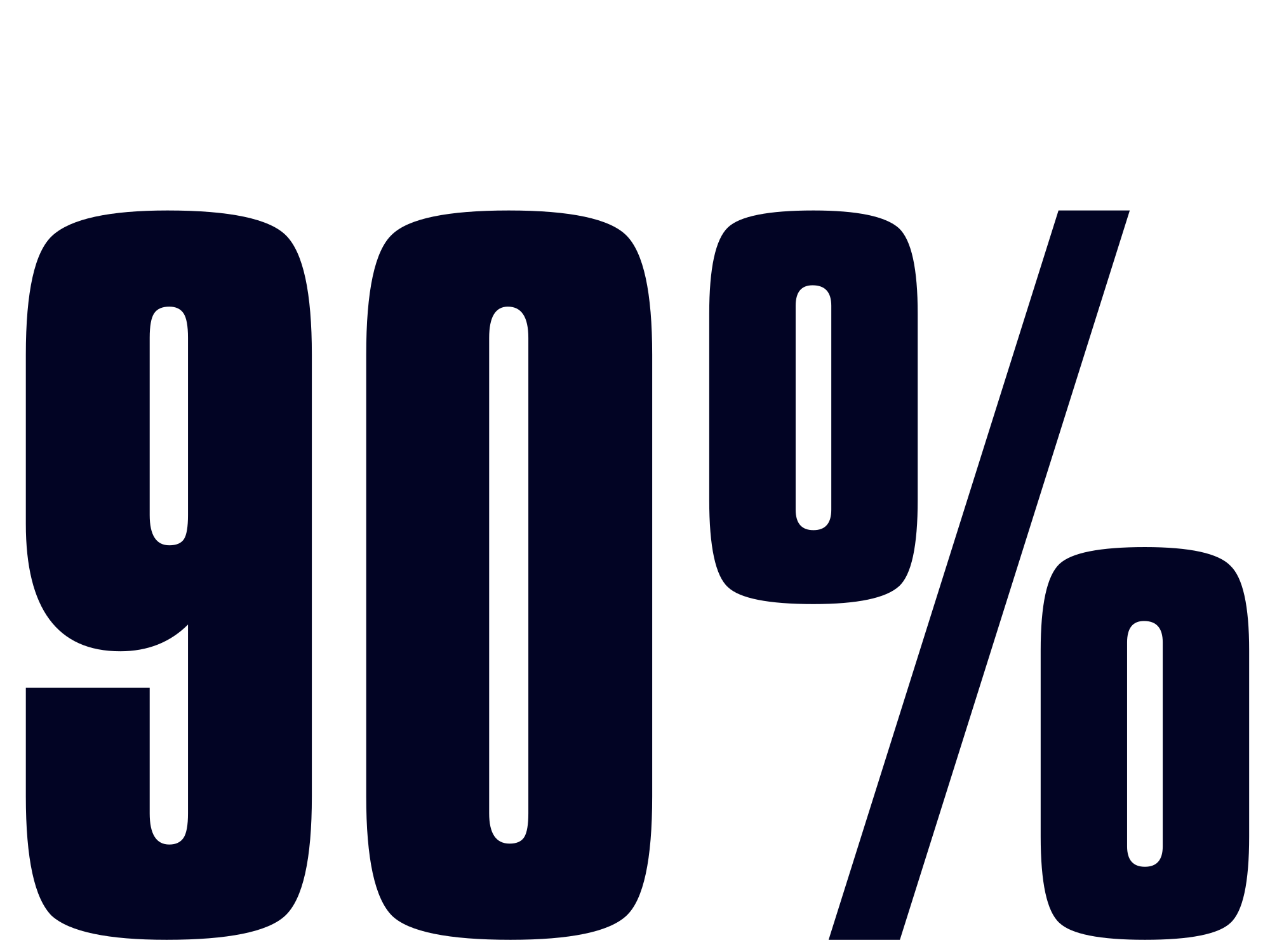
of employees say they’re more likely to put in extra effort when their work gets noticed
ACHIEVERS
Nobody sets out to create a workplace where people feel overlooked. But as organizations grow, recognition often becomes inconsistent.
Great work happens every day, yet whether it’s acknowledged often depends on the manager. One department celebrates wins regularly, while another rarely does. Before long, employees are having completely different experiences inside the same organization.
Recognition stops being part of the culture and starts depending on whom you report to. Employees notice. Some feel valued and appreciated. Others quietly wonder if anyone sees the work they’re doing.
Most organizations we work with are somewhere between Flicker and Fire. We help them build a culture of recognition that grows into a Blaze.
Recognition happens occasionally. Someone says thank you in a meeting or sends a message after a big project, but there’s no rhythm behind it. Employees appreciate it when it happens, but they never know when that will be.
Recognition has a place to live. Maybe it’s a Workvivo space, a Teams channel, or an intranet page. Some teams embrace it, while others barely use it. The intention is there, but the habit hasn’t caught on.
The organization has invested in recognition. There’s a platform, a budget, maybe even formal award programs. Recognition happens more consistently, but it still relies on HR or a handful of enthusiastic leaders to keep it going.
Recognition no longer depends on reminders. Leaders model it. Peers celebrate each other. New hires experience it in their first week. Recognition has become part of your culture.
Where does your recognition culture stand? Discover where your organization sits on the Recognition Maturity Framework and gain a clear understanding of what’s needed to build a culture where recognition happens every day.
During this complimentary workshop, we’ll assess your current approach, identify your biggest opportunities, and provide a practical roadmap tailored to your organization.
100% FREE FOR QUALIFYING ORGANIZATIONS.
WHAT WE DO
A recognition platform can support your culture, but it can’t create one on its own. Lasting impact comes from thoughtful program design, active leadership, and making appreciation feel natural in the flow of daily work.
We bridge that gap, helping you design and implement the systems that turn recognition into a core part of how your people connect and thrive.
.png?width=63&height=63&name=Compass%20(1).png)
Every organization defines recognition differently, and the best programs reflect that.
Together, we’ll design an approach that aligns with your culture, values, and workforce so recognition feels authentic, not forced.
Technology should make recognition easier, not more complicated.
Whether you’re launching a new platform or improving an existing one, we configure the experience around how your employees already work so recognition becomes part of your daily rhythm.
Employees pay attention to what leaders recognize.
We help managers build simple, sustainable recognition habits that encourage participation across the organization and reinforce the behaviours your culture values most.
.png?width=63&height=63&name=Adoption%20(1).png)
Recognition culture doesn’t happen on launch day.
We support communications, change management, measurement, and ongoing optimization so participation continues long after implementation, not just during Employee Appreciation Week.
We built AddFlint to solve one of the biggest gaps we kept seeing: recognition that never became part of the culture.
AddFlint is an employee recognition and rewards platform that turns recognition into a daily habit instead of a once-in-a-while initiative.
Designed for enterprise organizations, it brings together peer recognition, meaningful rewards, nomination campaigns, and reporting that helps you measure participation, adoption, and culture health.
Because AddFlint embeds directly into the digital workplace your employees already use, recognition becomes part of the workday, not another app people forget to open.
The result is a recognition program that's easier to adopt, easier to manage, and far more likely to become part of your culture.
.png?width=2000&height=1662&name=IC%20Page%20People%20Case%20Studies%20(64).png)
%20(1).png?width=68&height=68&name=Rewards%20(5)%20(1).png)
Give every recognition real value with configurable points that employees can redeem for gift cards, cash, charitable donations, or your own internal rewards.
%20(1).png?width=50&height=50&name=Instant%20Recognition%20(2)%20(1).png)
Celebrate great work while it matters most. Reduce the time from recognition to reward from weeks to minutes, keeping appreciation timely and meaningful.
%20(1).png?width=50&height=50&name=Recognition%20Campaigns%20(2)%20(1).png)
Launch nomination campaigns, manage voting, select winners, and celebrate peer recognition without juggling multiple tools.
.png?width=50&height=50&name=Digital%20Workplace%20(3).png)
AddFlint embeds directly into Workvivo and other intranets, so recognition becomes part of your employee experience.
%20(1).png?width=50&height=50&name=Budget%20(2)%20(1).png)
Stay in control of every recognition dollar. Track budgets, approvals, and reward spending with built-in controls that keep HR and Finance aligned.
%20(1).png?width=50&height=50&name=Insights%20(3)%20(1).png)
Spot engagement trends before they become problems. See which teams are actively recognizing one another and identify areas that may need additional support.
%20(1).png?width=50&height=50&name=Configuration%20(2)%20(1).png)
Build a program that reflects your culture. Customize recognition types, point values, campaigns, branding, and workflows to fit the way your organization works.
%20(1).png?width=50&height=50&name=Security%20(3)%20(1).png)
Scale with confidence. Support enterprise requirements with SSO, SCIM provisioning, multi-tenant architecture, and security built for large organizations.
We help you design a workplace culture where appreciation is the default, turning your recognition strategy into a daily habit rather than a one-time initiative.
.png?width=62&height=62&name=Key%20(1).png)
We believe technology should be the catalyst for your culture, not the constraint. Our focus is on designing experiences that fit the way your employees already connect and thrive.
We bridge the gap between HR, Internal Comms, EX, and IT. By aligning these often-siloed teams, we ensure your project stays cohesive and moves forward without the usual friction.
.png?width=62&height=62&name=Bullseye%20(1).png)
We focus on what actually moves the needle: higher adoption rates, clearer communication, and a digital workplace that gives employees more confidence in their roles.
%20(1).png?width=62&height=62&name=Adoption%20(2)%20(1).png)
A launch is just the start. We prioritize the after, building communication plans, governance, and training that keep your program alive and thriving long after the initial setup.
.png?width=65&height=65&name=Swiss%20Army%20Knife%20(1).png)
You don’t need to juggle multiple vendors. From the initial strategy and design to technical implementation and ongoing optimization, we are with you for the whole journey.
.png?width=62&height=62&name=Long-Term%20Partner%20(1).png)
We don't just go live and move on. We build lasting relationships, growing and evolving alongside your organization as your needs and goals shift over time.

FAQs
Do you still have questions?
Employee recognition is the practice of acknowledging an employee's contributions, behaviours, achievements, or milestones in a meaningful way.
It can take many forms, from a simple verbal thank-you or a shout-out in a team meeting, to formal employee recognition awards, certificates, bonuses, or company-wide announcements.
Recognition can be given from a manager to an employee (top-down), from colleagues to one another (peer-to-peer), or even from the whole organization.
At its core, employee recognition is about making people feel seen, valued, and appreciated for the work they do.
Employee recognition is important because it directly impacts how engaged, motivated, and loyal employees feel.
When people are consistently recognized for their efforts, they are more likely to stay with a company, perform at a higher level, and feel emotionally invested in their work.
Research consistently shows that organizations with strong recognition cultures experience lower turnover, higher productivity, and better overall morale.
Beyond the individual, recognition reinforces the behaviours and values a company wants to see more of, making it one of the most cost-effective tools in any HR or people strategy.
Simply put, employees who feel recognized are more likely to go above and beyond.
Workplace culture refers to the shared values, beliefs, behaviours, and practices that define how people interact and work together within an organization. It encompasses everything from leadership style and communication norms to how decisions are made and how employees are treated day-to-day.
A positive workplace culture creates an environment where people feel safe, respected, and motivated, which in turn drives productivity, collaboration, and retention.
A toxic or negative workplace culture, on the other hand, can erode trust, increase absenteeism, and drive talented employees out the door.
Culture is often described as "the way we do things around here," and it matters because it shapes every employee's experience from the moment they join a company.
Employee recognition and workplace culture are deeply interconnected.
When recognition is practiced consistently and equitably, it reinforces the values and behaviours that define a healthy culture, things like collaboration, accountability, innovation, and inclusivity.
Celebrations and recognition reflect workplace culture by signalling to employees what the organization truly values. A company that publicly recognizes teamwork, for example, sends a clear message that collaboration matters.
Over time, a culture where recognition is woven into everyday interactions builds psychological safety, increases belonging, and makes the workplace a more positive and energizing place to be.
Conversely, organizations that rarely recognize employees often develop cultures of disengagement and apathy.
An employee recognition program is a structured, intentional system through which a company acknowledges and rewards employee contributions.
It can range from informal initiatives, like a monthly shout-out channel in a messaging app, to formal programs with tiered awards, points systems, and nomination processes.
To build an effective employee recognition program, consider these steps:
Define your goals. Are you trying to reduce turnover, boost morale, reinforce company values, or all of the above?
Choose recognition types. Balance formal recognition (annual awards, years-of-service milestones) with informal, real-time recognition (peer shout-outs, manager praise).
Make it frequent and timely. Recognition is most impactful when it's given close to the moment it was earned.
Ensure inclusivity. Make sure the program is accessible to all employees — including remote workers and frontline staff.
Set criteria. Employees should understand what behaviours and achievements are recognized so the program feels fair and motivating.
Measure and iterate. Use employee recognition survey questions and engagement scores to assess whether your program is making an impact.
The best employee recognition programs feel genuine, align with company values, and give employees multiple ways to be recognized, not just through top-down awards.
At LineZero, we’ve found that the most successful programs are those that integrate seamlessly into the digital workplace so that recognition becomes a habit, not a destination.
Peer-to-peer recognition (also called peer recognition or P2P recognition) is when employees acknowledge and appreciate one another's contributions directly, rather than relying solely on managers or leadership to do so.
It might look like a colleague nominating a teammate for a "kudos" award, leaving a note of appreciation in a shared recognition platform, or simply giving a public shout-out in a team channel.
Peer recognition is important because it distributes the act of appreciation across the entire organization, making recognition more frequent, more authentic, and more visible.
Employees often have the clearest view of their colleagues' day-to-day efforts, so peer recognition captures contributions that managers might miss.
Studies suggest that peer recognition is among the most meaningful forms of acknowledgment employees can receive, as it comes from the people they work most closely with.
Yes! When designed and implemented thoughtfully, employee recognition programs are highly effective.
Multiple studies have demonstrated that organizations with strong recognition programs report significantly higher employee engagement, lower voluntary turnover, and improved performance outcomes compared to those without them.
However, recognition programs can fall flat when they feel generic, infrequent, or performative. A program that only recognizes the same handful of high performers, or that uses boilerplate language, may do more harm than good.
The key factors that make recognition programs work are timeliness, specificity, sincerity, consistency, and alignment with what employees actually value.
Our team at LineZero specializes in helping enterprise organizations move beyond generic initiatives to design programs that actually resonate with the unique culture of their workforce.
Recognition and employee engagement are closely linked.
Employee engagement refers to the level of emotional commitment and enthusiasm an employee feels toward their work and organization. When employees receive meaningful recognition, it fulfills a core psychological need, the need to feel that their work matters.
This sense of purpose and appreciation translates directly into higher engagement: recognized employees are more focused, more productive, more willing to collaborate, and more likely to advocate for their employer.
Recognition also reinforces engagement by creating a feedback loop. When employees are acknowledged for specific behaviours or results, they understand what "good" looks like and are motivated to repeat it.
Over time, a culture of recognition becomes a culture of engagement, where people show up energized and invested rather than just going through the motions.
Let’s build a workplace where your people feel recognized, connected, and inspired to do their best work.